You can contact us with the problem you are having and we will investigate.
Stripe Online Payments
Sellingantiques have now partnered with Stripe card processing to give you a seamless purchase experience of antiques on sellingantiques.
Millions of companies of all sizes use Stripe online to accept payments and is the worlds No.1 payment gateway.
So how does it work: Look for the button in the antique details page to instantly purchase antiques from dealers who have activated Stripe online payments.
You can now easily filter and show antiques that only have this option enabled.
Using this button notifies us immediately that you have purchased this item. Once you have made the payment we will instantly mark it as sold to ensure that no one else can buy it.
Discounts can also be made available.
We are always improving the purchase experience for both buyer and seller and more and more dealers are enabling this option each week.
You are here:HomeAntique StoolsAntique Joint Stools (2)
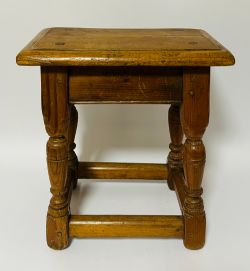
An antique joint stool, also known as a joined stool, is a type of stool that was commonly used during the 16th to 18th centuries. Joint stools are known for their sturdy construction and traditional joinery techniques, making them durable and long-lasting.Key characteristics of antique
... show more detail joint stools include:1. Simple and Functional Design: Joint stools typically have a simple and utilitarian design. They consist of a rectangular or square seat supported by four legs. The seat may be plain or feature a molded edge for added visual interest.2. Mortise and Tenon Joinery: Antique joint stools are constructed using traditional woodworking techniques, particularly mortise and tenon joinery. This method involves fitting a projecting tenon on one piece of wood into a corresponding mortise or hole in another piece, creating a strong and secure joint.3. Solid Wood Construction: Joint stools are usually made from solid wood, such as oak, elm, or walnut. These hardwoods were readily available during the time period when joint stools were popular. The choice of wood contributes to the stool's durability and stability.4. Pegged Joints: In addition to mortise and tenon joinery, joint stools often feature pegged joints. Wooden dowels or pegs are inserted through holes drilled in the joint to further reinforce the connection between the parts. This traditional technique adds strength and stability to the stool.5. Minimalistic Decoration: Joint stools typically have minimal decorative elements. The focus is on the craftsmanship and joinery rather than elaborate ornamentation. However, some joint stools may feature subtle carved details on the legs or aprons, reflecting regional or period-specific styles.6. Practical and Versatile: Joint stools were practical and versatile pieces of furniture. They were used for various purposes, such as seating, side tables, or footstools. Their compact size made them easy to move and position as needed in different rooms or settings.Antique joint stools hold historical significance as examples of early furniture construction techniques. They represent a time when skilled craftsmen used traditional joinery methods to create functional and durable pieces of furniture.The presence of an antique joint stool adds a touch of history and authenticity to a space. It serves as a functional seating option or accent piece that showcases the craftsmanship and design of a bygone era. Its simplicity and solid construction make it a timeless and enduring piece of furniture.On SellingAntiques, you can find a great range of Antique Joint Stools! We have 1 items for sale priced from £195 to £195 show less detail




 0
0




Thank you.
Your comment has been sent to Sellingantiques.